
Galup Urban Biotope Report
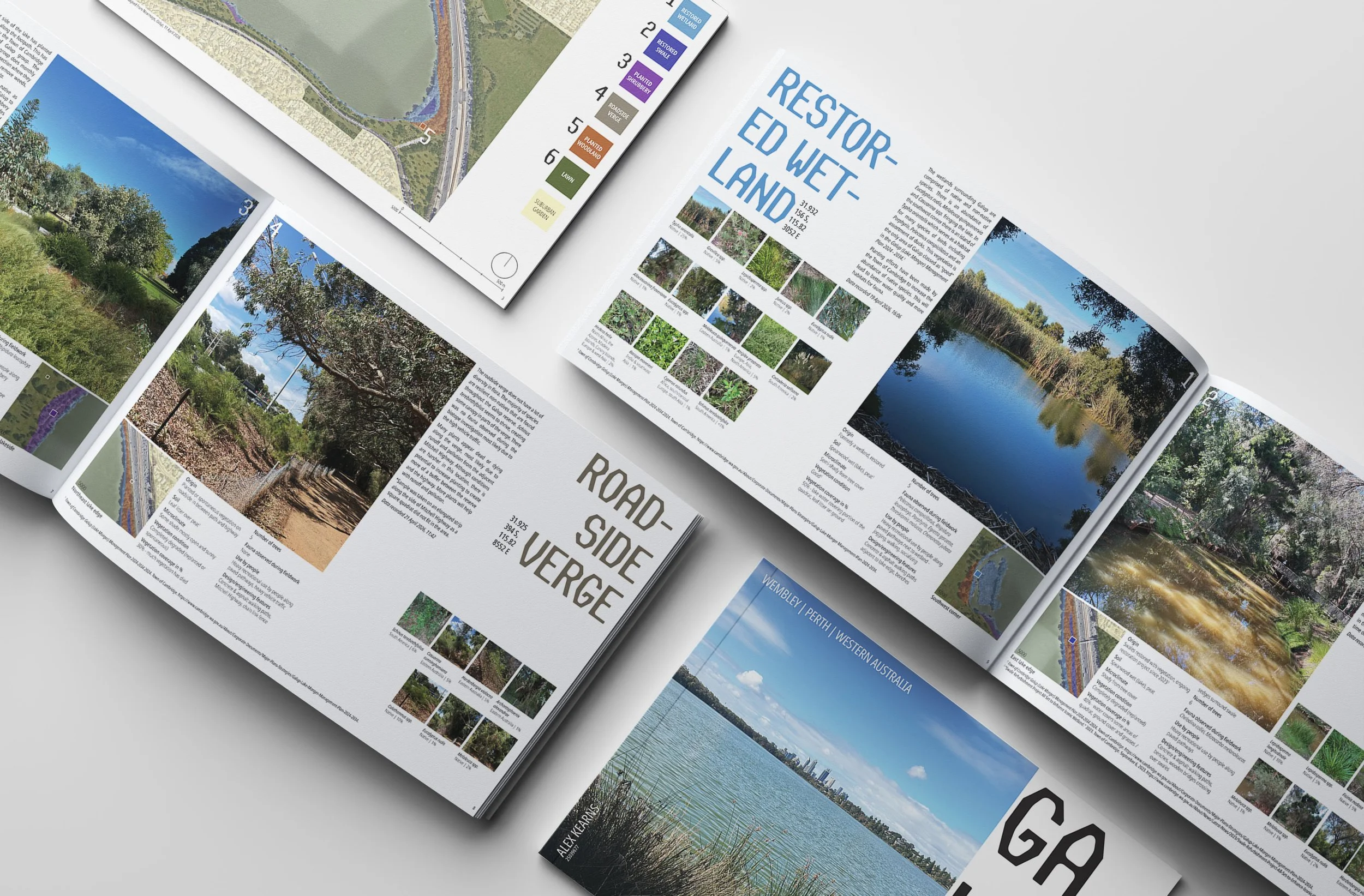
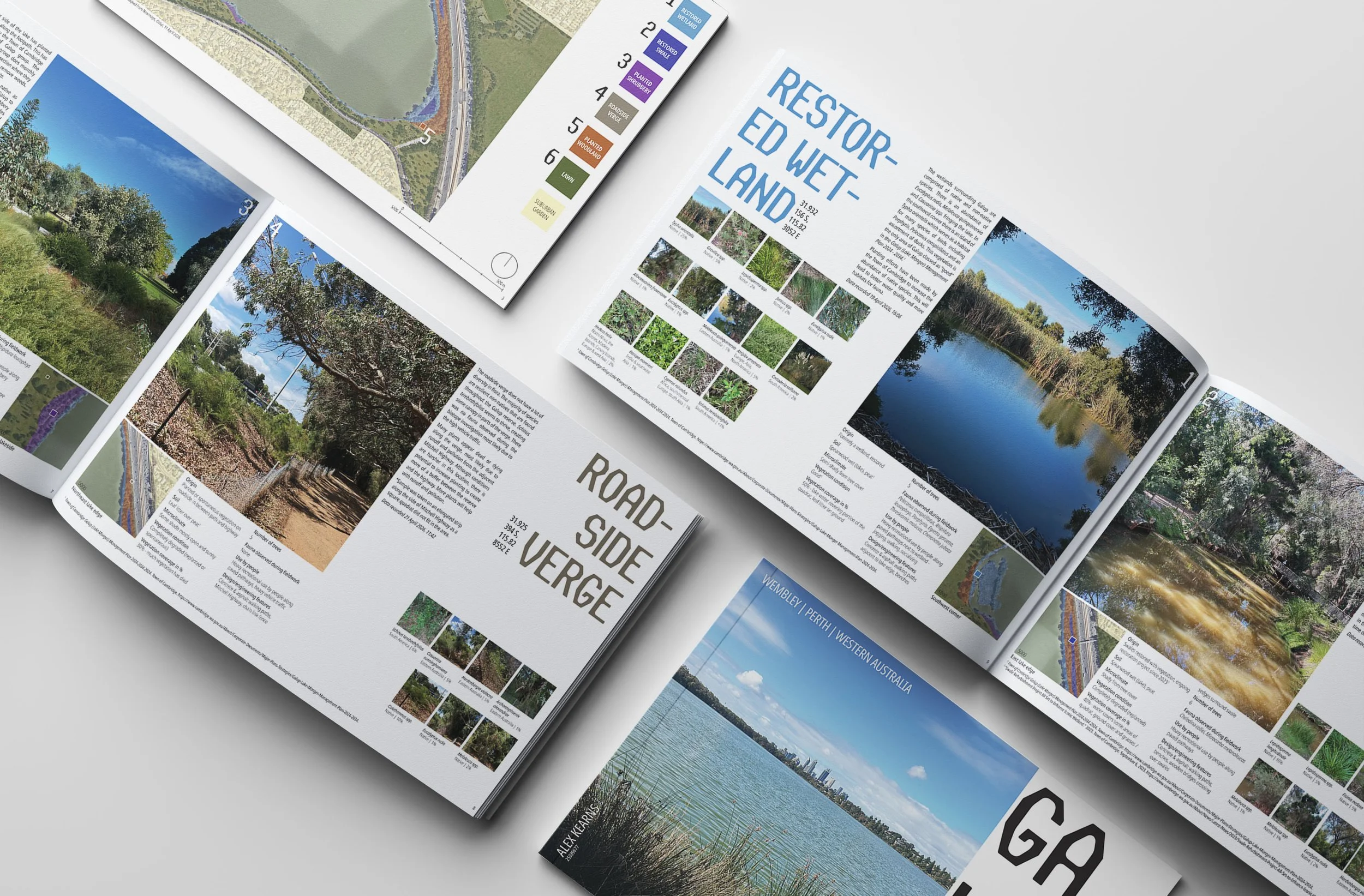
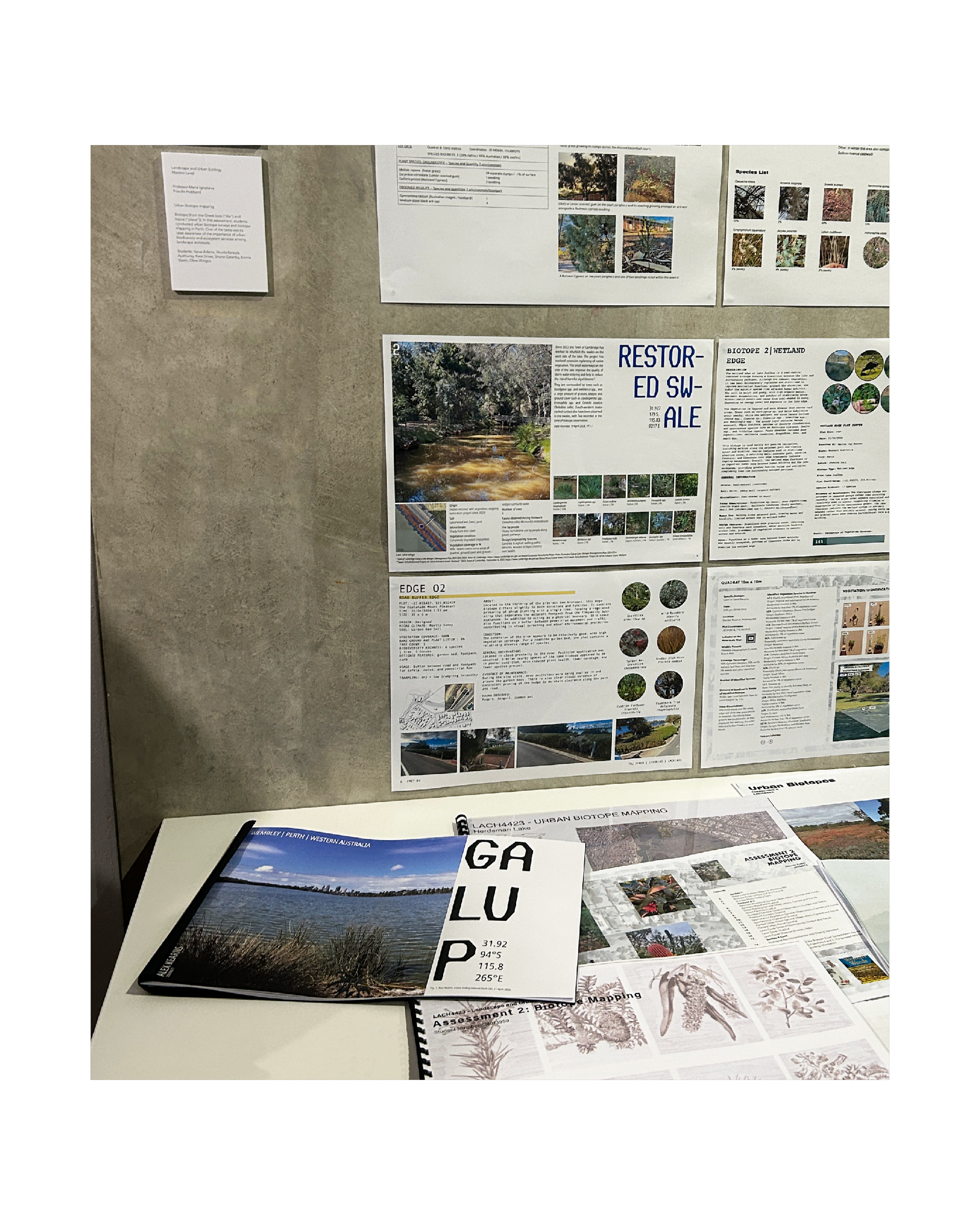
A report on six biotopes from Galup (Lake Monger) in Wemblely, Perth, WA. This report was featured in the University of Western Australia’s 2026 Winter Collective Exhibit. Galup (Kaarlup) is a 106-hectare reserve located about 3.6 km northwest of Perth CBD. This report sought to record and analyse the flora present in six different locations around the lake and provide observations and recommendations for future improvements.
Historically, the site was a Whadjuk Noongar camping and hunting ground that served as a place for food resources and remains of cultural significance to this day. Since the mid 1800s, the site has been greatly modified with the majority of natural flora being removed to create a traditional European-style lake. Native sedges and fringing vegetation were removed and replaced with exotic trees and grasses planted to the edge of the water. Galup was subject to land reclamation projects beginning in the 1930s, including the dumping of raw sewage and silt dredging. The removal of native vegetation and land reclamation projects led to deterioration in the quality of water. The poor water quality of the lake is also attributed to runoff from the Mitchell Freeway and surrounding residential areas.
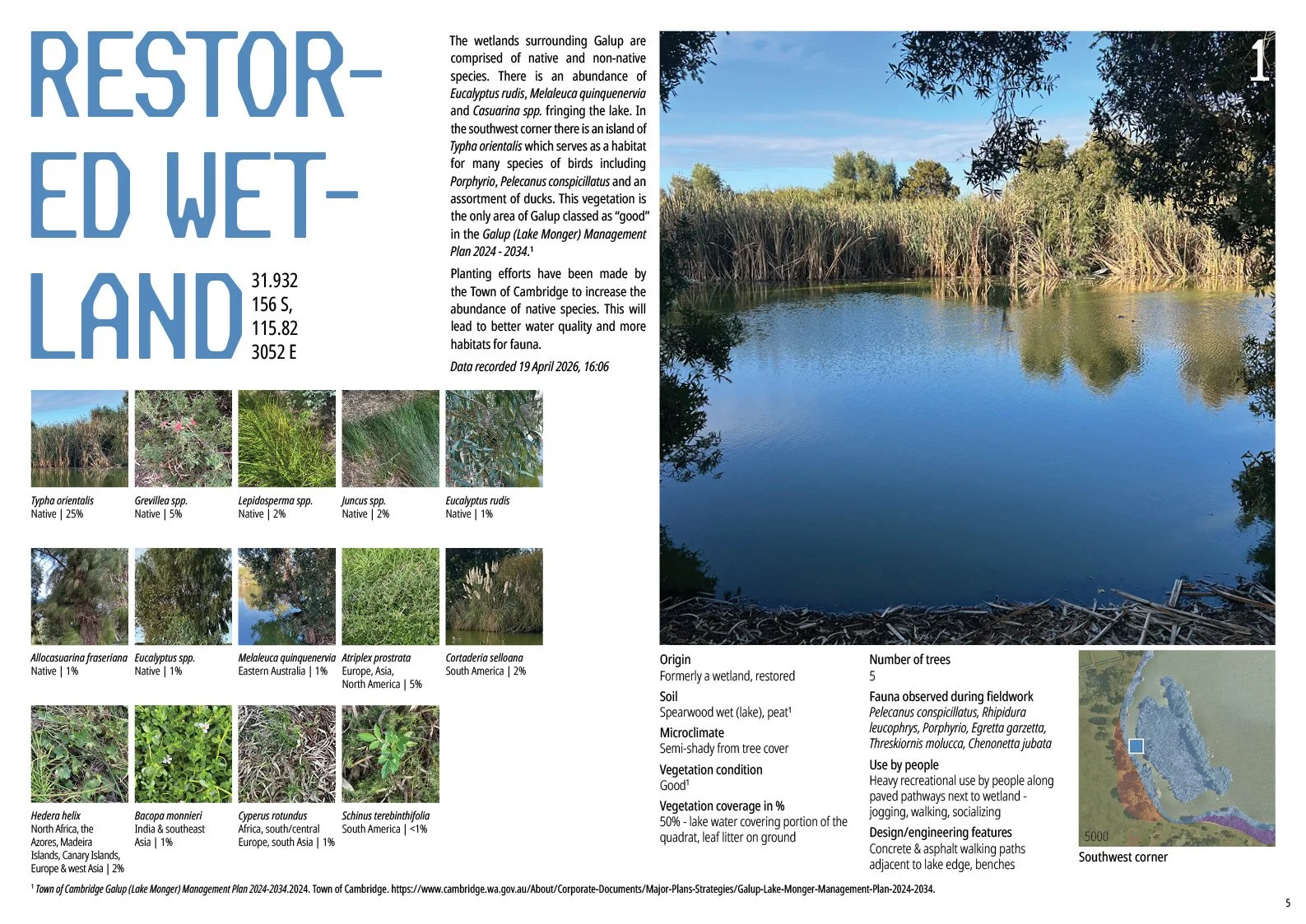
Due to the removal of native flora beginning in the 1800s, 89.2% of the vegetation on the reserve is classed as “completely degraded” with the only “good” vegetation section an island that was built as a bird refuge in the 1960s. More recently efforts have been made to replant native vegetation and improve the water quality of the lake. Placing sedges and other endemic plants on the fringes of the lake are expected to lead to improved water quality and more friendly environments for native fauna.
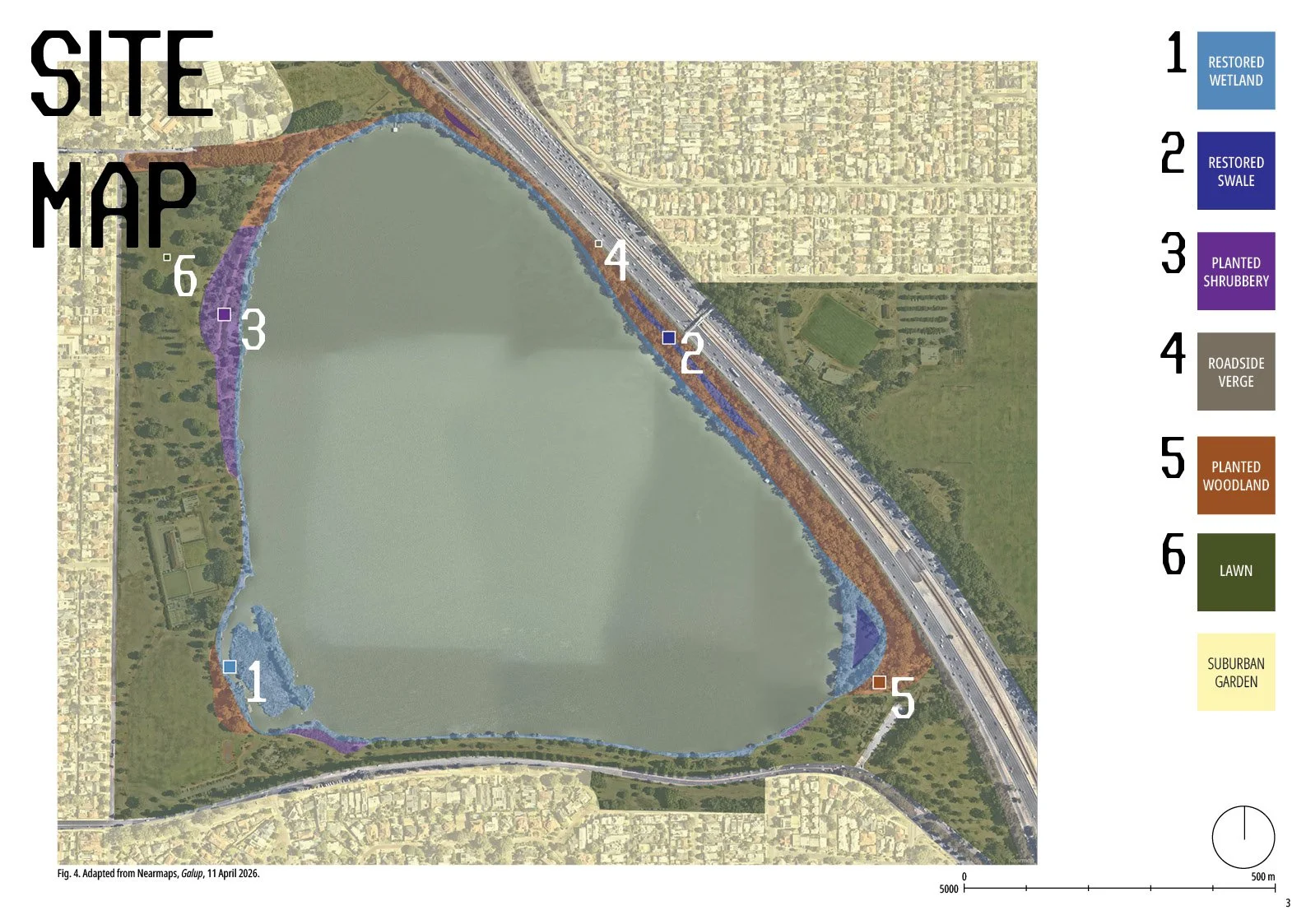
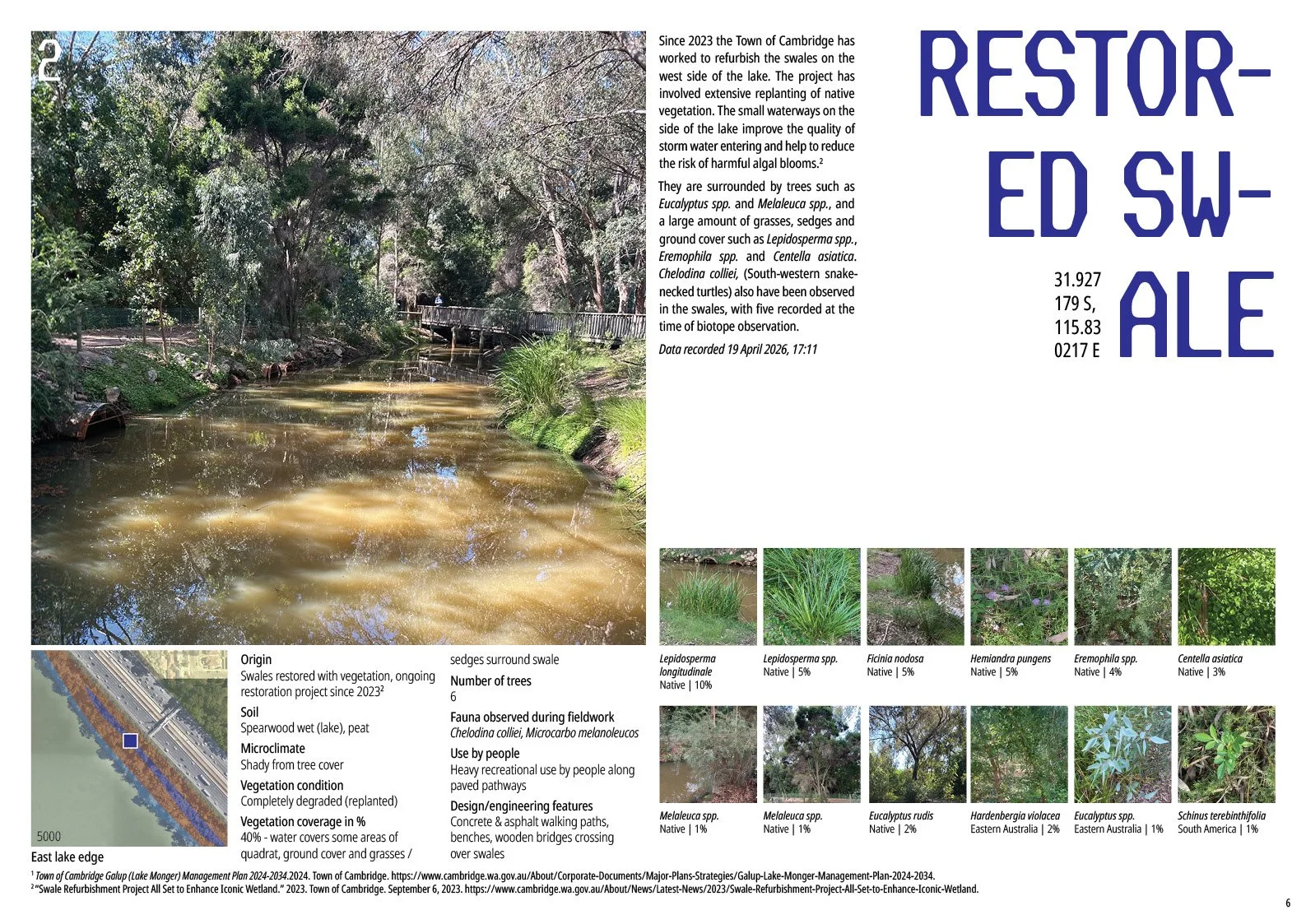
The biotopes analysed were: restored wetland, restored swale, shrubbery, roadside verge, woodland and lawn.